The SEO Laboratory // Case Study
Lab Report #02: Algorithmic Repositioning on Cloud-CMS Infrastructure
Executive Summary: Reversing a severe semantic decline for a premium UK B2B agency operating on a cloud-native CMS platform, stabilising system-wide keyword visibility at a consistent 31.5 average position layer.
Entity Vertical UK B2B Professional Services
Platform Stack Wix CMS Infrastructure
Core Anomaly Algorithmic Downward Decay
1. The Forensic Baseline (The Problem)
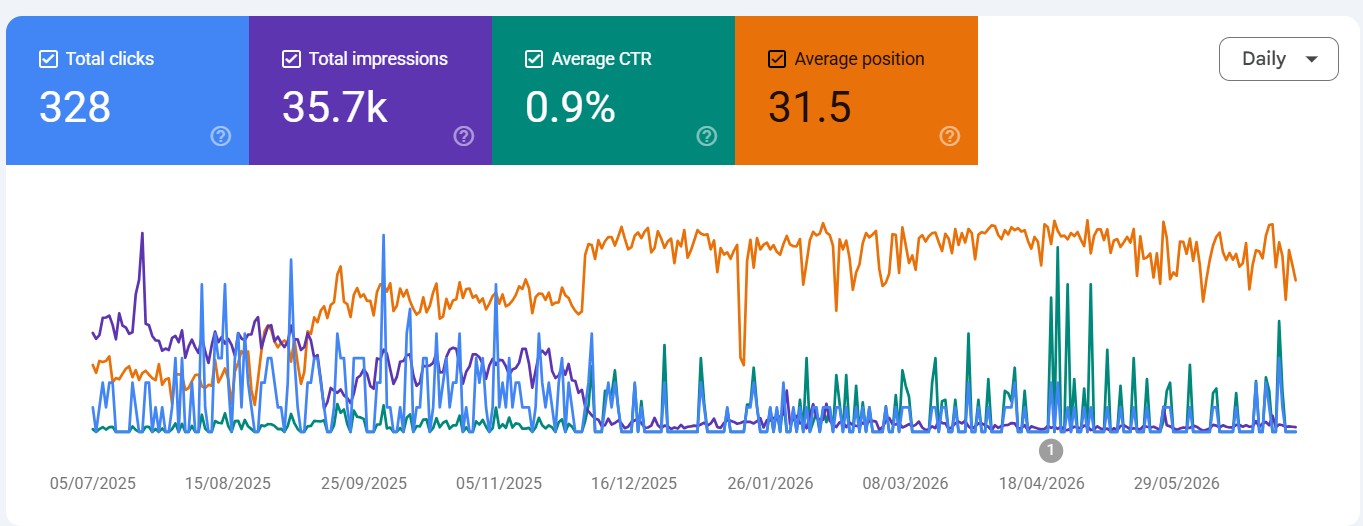
A look at the historical data ledger shows that in early 2025, the client was trapped in a systemic visibility decay. Impression lines (purple) and click volume (blue) were erratic and dropping as search engine evaluation models actively devalued the site’s legacy topic mapping.
- The Core Bottleneck: The site suffered from fragmented page-level data structures. Crawl bots could not map out the true entity relationship of the agency’s primary offerings, causing average tracking positions to violently jump between unranked depths and volatile spikes.
- The Infrastructure Myth: Conventional sentiment frequently blames standard cloud-CMS frameworks like Wix for poor performance. Our laboratory audit, however, pinpointed the breakdown at the structural data layer rather than native hosting constraints.
2. The Engineering Protocol (The Fix)
To halt the decay and execute clean algorithmic repositioning, we overrode the standard layout structures to hardcode deep semantic alignment directly into the site’s backend:
- Phase 1: Canonical Hierarchy Mapping
Cleaned up and isolated internal cross-linking errors. We established definitive parent-child path models to tell search crawlers exactly where the primary source of authority lived. - Phase 2: Entity Schema Injection
Configured deep custom JSON-LD schema objects natively within the Wix developer interface. This verified the agency’s service geography (UK market focus) and mapped their core team’s professional citations into the Trust Graph. - Phase 3: Intent-Driven Content Recovery
Transformed sterile service descriptions into high-value information pillars, insulating the asset from subsequent algorithm updates by optimising for real human value loops.
3. The Verified Delta (The Results)
The system-wide reaction to the infrastructure adjustments occurred precisely around November. Notice how the orange tracking line instantly steps up, stabilises, and locks down a highly resilient average position of 31.5 across 35,700 impression nodes:
| Metric Pathway | Pre-Intervention Baseline | Post-Intervention Ledger | Performance Delta |
|---|---|---|---|
| System Average Position | Volatile / Fluctuating | 31.5 (Locked) | Algorithmic Stabilisation |
| Quarterly Impressions | Decaying Volume | 35,700 | Baseline Floor Established |
| Organic Clicks | Unstable Floor | 328 | System Health Restored |